
Climate change
Coastal erosion: causes and challenges for the 21st century
Report by Caio Vinícius Gabrig Turbay
August 2023
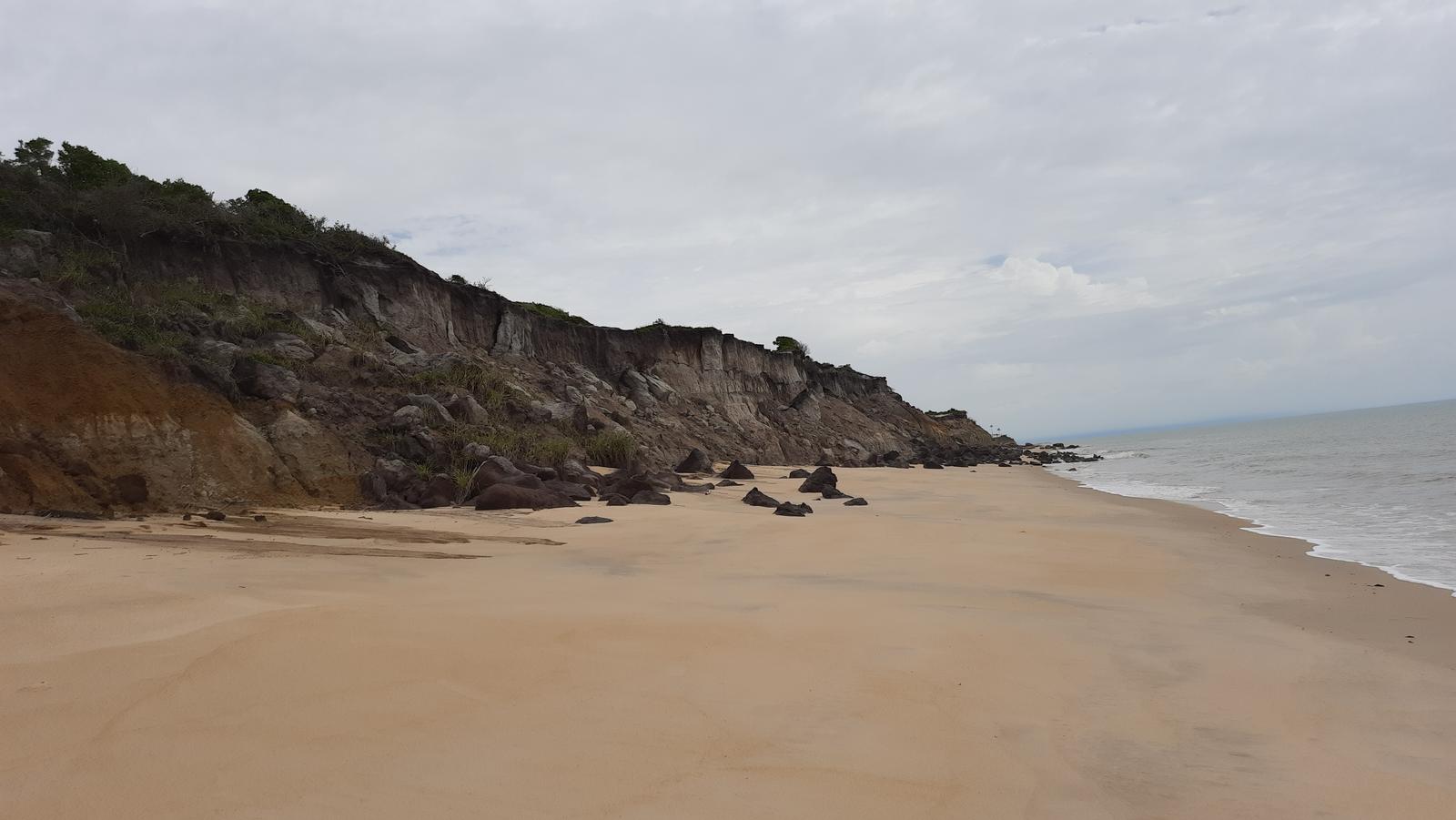
A cliff eroded by the sea, with fallen blocks of rock on the beach. Photo: Caio Turbay.
Walking along the beaches of Arraial d'Ajuda at high tide is a challenge. In many stretches the beach is taken over by irregular buildings that push out onto the strip of sand. Walkers find themselves forced to climb onto retaining walls or lean against the eucalyptus palisades of private properties, at the risk of being drenched by waves that crash against the structures.
But the strategies used to occupy coastal areas may have their days numbered. The sea is slowly taking back the land stolen by humans. During spring tides, the highest tides of the lunar month, at full and new moons, the force of the waves slowly reclaims the land, weakening walls and uncovering wooden fences. The work intensifies during storm surges, when the force of the tides is amplified by winds blowing in from the ocean. In winter, when great storms strike the South Atlantic, it is common to witness the destruction of seafront buildings and the almost constant repair of walls, landfills and fences.
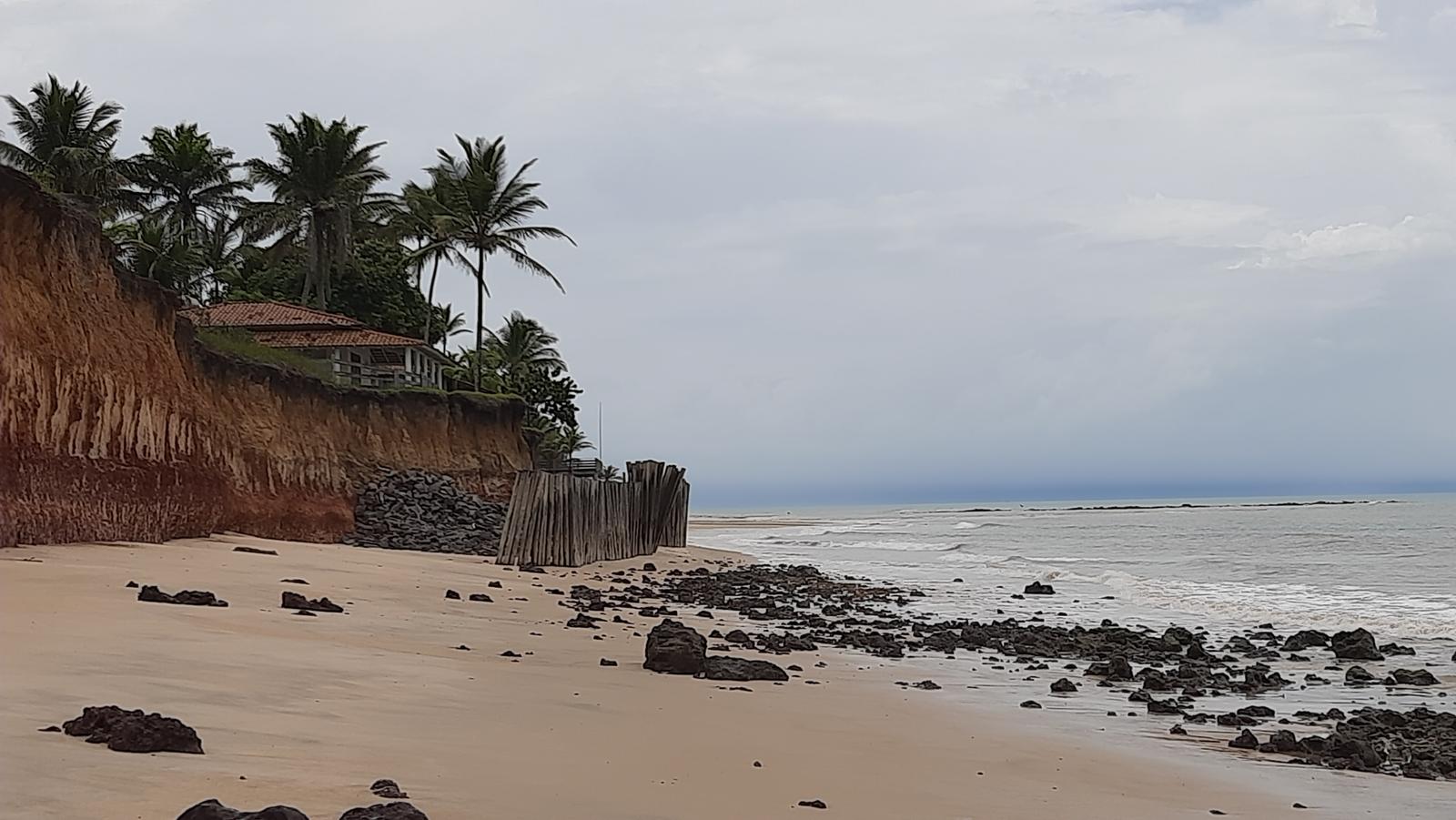
The sea is slowly taking back the land stolen by humans.
But the problem is not limited to Arraial d'Ajuda. Many stretches of the coast in southern Bahia, and of Brazil as a whole, have suffered constantly from coastal erosion. At Ponta Grande, a headland in Porto Seguro, the constant work of erosion forced the city government to place large blocks of rock beside the road to hold back the force of nature. In Mucuri, in the far south of Bahia, the local administration has struggled since 2014 to contain the sea, which destroys streets and houses. The same is happening in Ilhéus, Prado, and many other municipalities in Bahia and across Brazil.
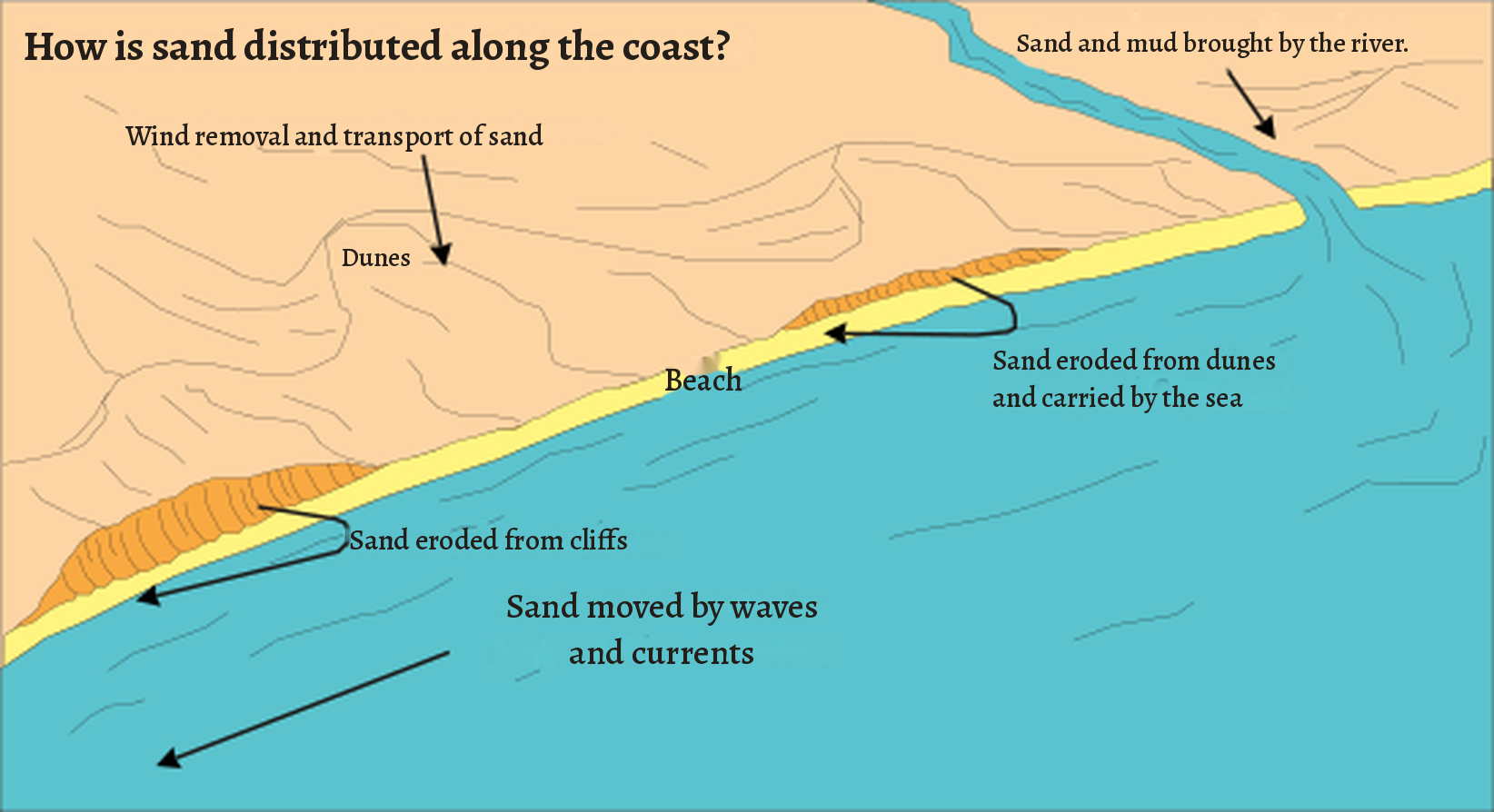
The question of coastal erosion still involves many uncertainties and calls for deeper study. This is because, in the short term, over days, months or a few years, the coastline changes due to natural causes, such as changes in wave intensity and direction, storm events and seasonal climate variations, or even human interference, which, through engineering works, alters the transport of sediments along the coast and intensifies erosion in some sectors.
Studies published by Professor José Maria Landim Dominguez, of the Institute of Geosciences of the Federal University of Bahia, and colleagues strengthen the view that erosion and changes along the coast of the states of Sergipe and Bahia are related to short-term variations caused by waves, storms and human interference along the shore.
Nevertheless, many of the studies that demonstrate short-term changes admit a possible influence of sea level rise over periods of several decades, in what are called long-term changes. Doubts about proving long-term erosional changes exist only because of the lack of older monitoring data covering longer periods of time.
Studies by Professor Stephen Leatherman, of the Laboratory for Coastal Research at Florida International University, and colleagues suggest that small changes, on the order of millimeters, in the world's sea level can cause a much greater retreat of the coast, tens of times the height of the rise. In other words, an average rise of just 1 centimeter in sea level could, hypothetically, make the shoreline retreat by about a meter or more on a sandy beach. The relationship is still debated within the scientific community and varies from beach to beach.
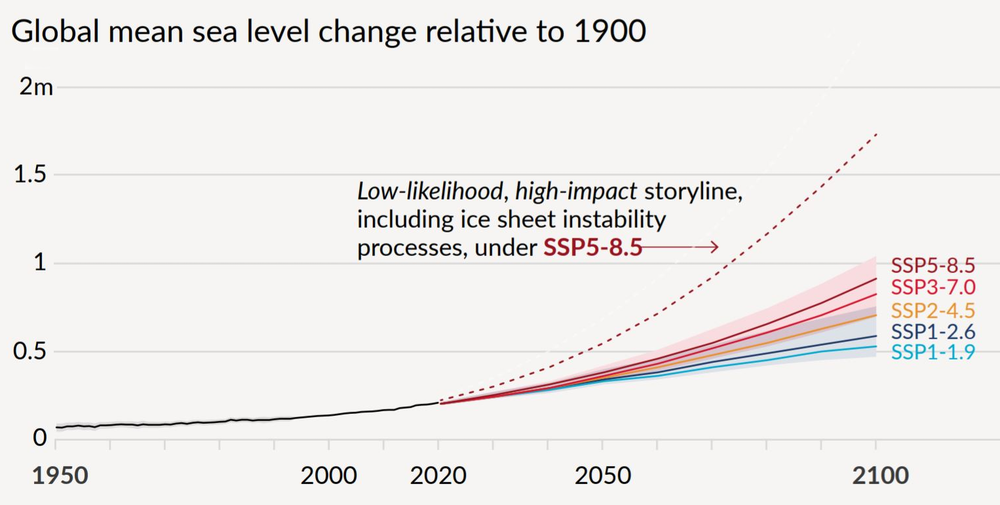
An article published in the journal Nature in 2020 by researcher Thomas Frederikse, of NASA's Jet Propulsion Laboratory in Pasadena, California, showed that since the beginning of the 20th century the world's sea level has already risen by about 20 centimeters. The August 2021 report of the United Nations Intergovernmental Panel on Climate Change, the IPCC, suggests a possible rise of about 28 to 55 centimeters in sea level by 2100. That is in one of the more optimistic projections, if greenhouse gas emissions are reduced. In the worst case, we will see from 63 centimeters to one meter of ocean rise by the end of the century. Considering that a large share of the Brazilian population lives in the big coastal capitals, by the end of the century governments will face a major environmental, social and economic challenge. The worst part, according to the IPCC, is that even if greenhouse gas emissions are reduced, the changes in the world's sea levels will last for roughly two thousand years, with a rise of two to three meters by the end of that period.
But what causes long-term changes in sea level? Earth's climate system oscillates between colder and warmer periods, in cycles lasting thousands of years. This dynamic follows a balance between the amount of heat generated by radiation arriving from the sun and the trapping of that heat in the atmosphere by gases such as carbon dioxide, methane and water vapor (the so-called greenhouse gases).
The intensity of radiation reaching the planet is related to variations in solar activity, and also to orbital cycles, which every so often, over thousands of years, make the Earth slightly closer to or farther from the sun, alternating warmer and colder periods. In addition, increases in natural emissions of carbon dioxide and methane, such as those from large volcanic eruptions, favor stronger global warming. Many other factors also work to warm or cool the planet. Besides supplying greenhouse gases, volcanoes can also throw large amounts of very fine volcanic ash into the atmosphere, which blocks solar radiation and helps cool the planet. Marine organisms that photosynthesize can also capture considerable amounts of atmospheric CO2 and slowly help cool the planet.
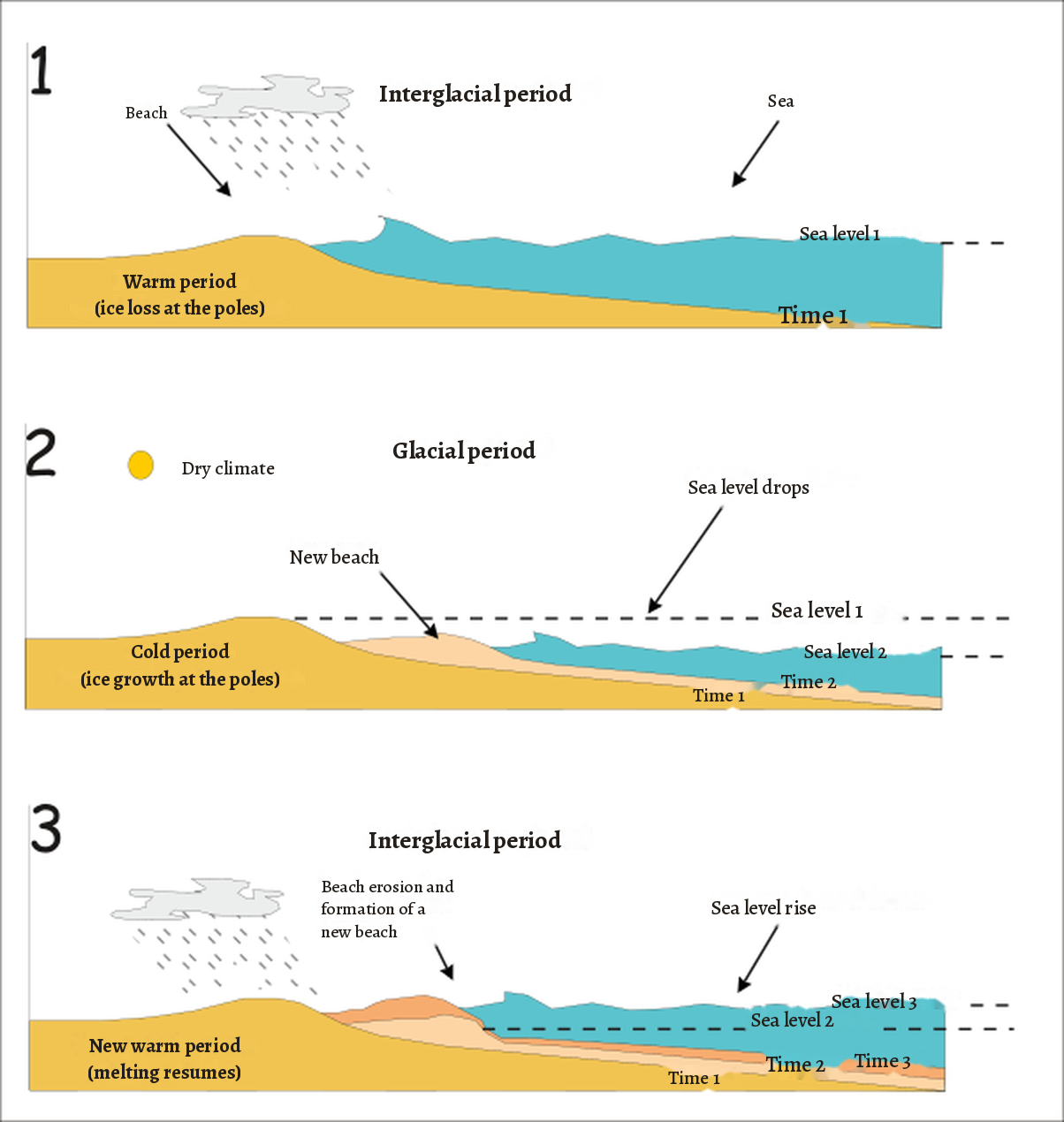
During the coldest periods in Earth's history, known as glaciations, ice sheets grow. Water removed from rivers, lakes and oceans by evaporation returns to the Earth's surface, on mountaintops and at the poles, as snow that later turns into ice. As a result, the world's sea level falls. That is what happened 12 million years ago, when the Antarctic ice cap formed, and also about 3 million years ago, when the ice sheet covering Greenland reached its maximum thickness. In the opposite direction, rising global temperatures driven by a stronger greenhouse effect partially melt the ice and the world's sea level rises.
The alternation between cold and warm periods is a constant feature of the Quaternary, the most recent geological period, which spans the last 2.6 million years of the planet's history. The cold periods established most of the large glaciers that still exist in the world's mountain regions, such as the Alps and the Patagonian ice fields in South America. In addition, the lowering of sea level during glaciations allowed a broad migration and dispersal of fauna, flora and humans across the continents.
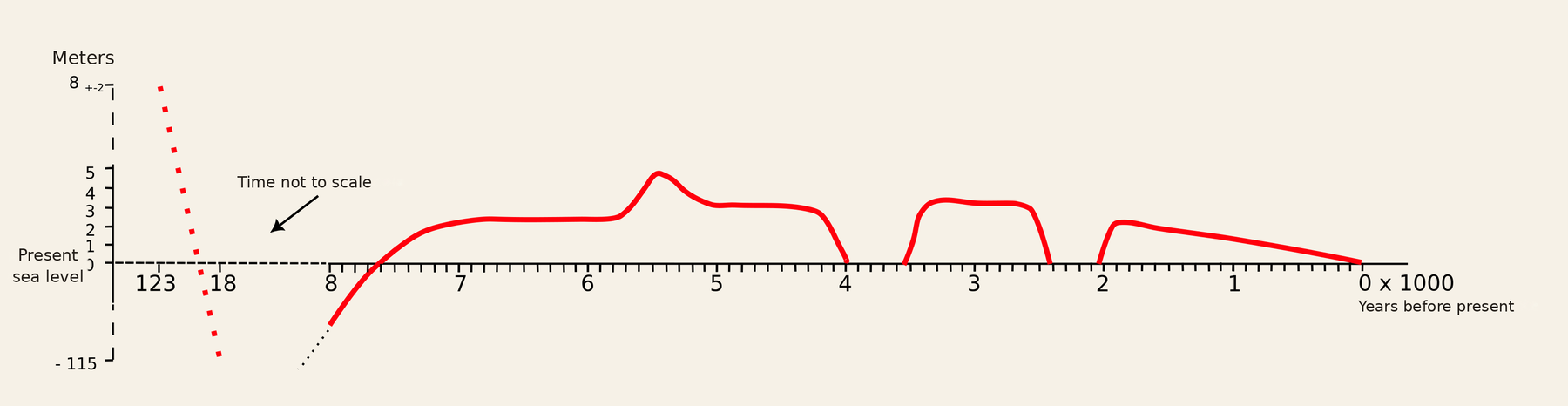
In Bahia, and in the rest of Brazil, geological records show at least 3 major long-term sea level variations during the Quaternary. About 120 thousand years ago, the sea stood roughly 8 meters above the present level. 18 thousand years ago, at the peak of one of the great Quaternary glaciations, sea level dropped below 100 meters. At that time, many places that are now underwater were cut by rivers. After the last glacial maximum of the Quaternary, about 12 thousand years ago, the Earth began warming again, which in geological terms is very recent. Around 5,600 years ago, the sea reached about 5 meters above the present level and later retreated, seeking the level we see today.
Following this logic, it is natural to think that atmospheric warming is an inevitable and natural path. However, human action has taken away the Earth's capacity to regulate itself. In other words, we extract the carbon locked in the planet's geological layers, soils and biosphere, mainly as oil and coal or through burning, and release it into the atmosphere in enormous quantities. The atmospheric warming simulations run by the IPCC, based on thousands of data sets and articles in the scientific literature, show that without human intervention the natural causes of global warming could not reach the temperature increases already recorded or expected this century.
But the effects of atmospheric warming are not reflected only in rising sea level, and they may be more devastating than we can imagine. Extreme weather events, such as large storms and cyclones, have become increasingly common, including in Brazil. In these cases, the effects of short-term variations, or even long-term ones, can be strengthened and the erosive power of the sea amplified.
Beyond the discussion about the main factors responsible for coastal erosion in the south of the state, there is certainty that the world's sea level is rising and that extreme weather events will become increasingly common. These facts, exhaustively demonstrated by the world scientific community and certain to affect our children and grandchildren, still do not seem to be part of the concerns of Brazilian society and its leaders. At the state level, the Secretariat for the Environment, despite having a law establishing climate change policies for the state (Law 12050 of 2011), promoting coastal management actions in some municipalities and setting up a Forum for Discussion on Climate Change (Decree 9519 of 2005), has not yet defined practical actions for issues related to sea level rise. We hope action comes in time.
Listen to the podcastEpisode 10 – What they didn’t tell you about climate changeUma Pedra no Caminho · 11 min · Spotify · in PortugueseSee also
Caio Gabrig Turbay is a geologist, environmentalist and university professor. He believes in a world of true deeds, solidarity and respect.
References
MUEHE, Dieter et al. PANORAMA DA EROSÃO COSTEIRA NO BRASIL. Ministério do Meio Ambiente, Brasília, 761p, 2018.
ALLAN, Richard et al. Climate change 2021: The physical science basis. Intergovernmental Panel on Climate Change (IPCC), 2021.
MUEHE, Dieter; NEVES, C. F. A zona costeira do Brasil e sua vulnerabilidade face à ocupação e às mudanças climáticas. Espaço e Tempo: Complexidade e desafios do pensar e do fazer geográfico. Curitiba: ADEMADAN, p. 425-439, 2009.
DE SOUZA, Jacqueline Lopes; SILVA, Iracema Reimao; SANTOS, Rodrigo Alves. POLÍTICAS DE ADAPTAÇÃO FRENTE ÀS MUDANÇAS CLIMÁTICAS GLOBAIS: ESTRATÉGIAS DE GESTÃO PARA AS PRAIAS DO MUNICÍPIO DE MATA DE SÃO JOÃO, LITORAL NORTE DA BAHIA, BRASIL. Geociencias, v. 39, n. 4, p. 1153-1166, 2020.
LEATHERMAN, Stephen P.; ZHANG, Keqi; DOUGLAS, Bruce C. Sea level rise shown to drive coastal erosion. Eos, Transactions American Geophysical Union, v. 81, n. 6, p. 55-57, 2000.
FREDERIKSE, Thomas et al. The causes of sea-level rise since 1900. Nature, v. 584, n. 7821, p. 393-397, 2020.
MARTIN, Louis; DOMINGUEZ, José M. L.; BITTENCOURT, Abílio C. S. P. Fluctuating Holocene sea levels in eastern and southeastern Brazil: evidence from multiple fossil and geometric indicators. Journal of Coastal Research, p. 101-124, 2003.
Comments
Your comment will be read and approved before it appears here.